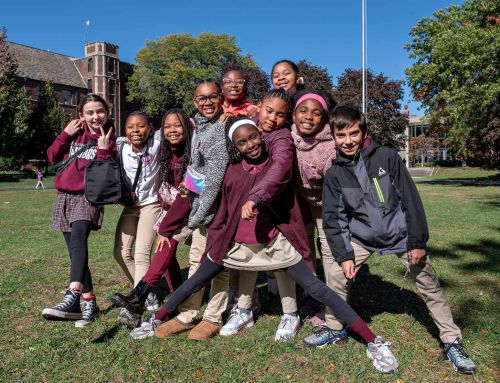
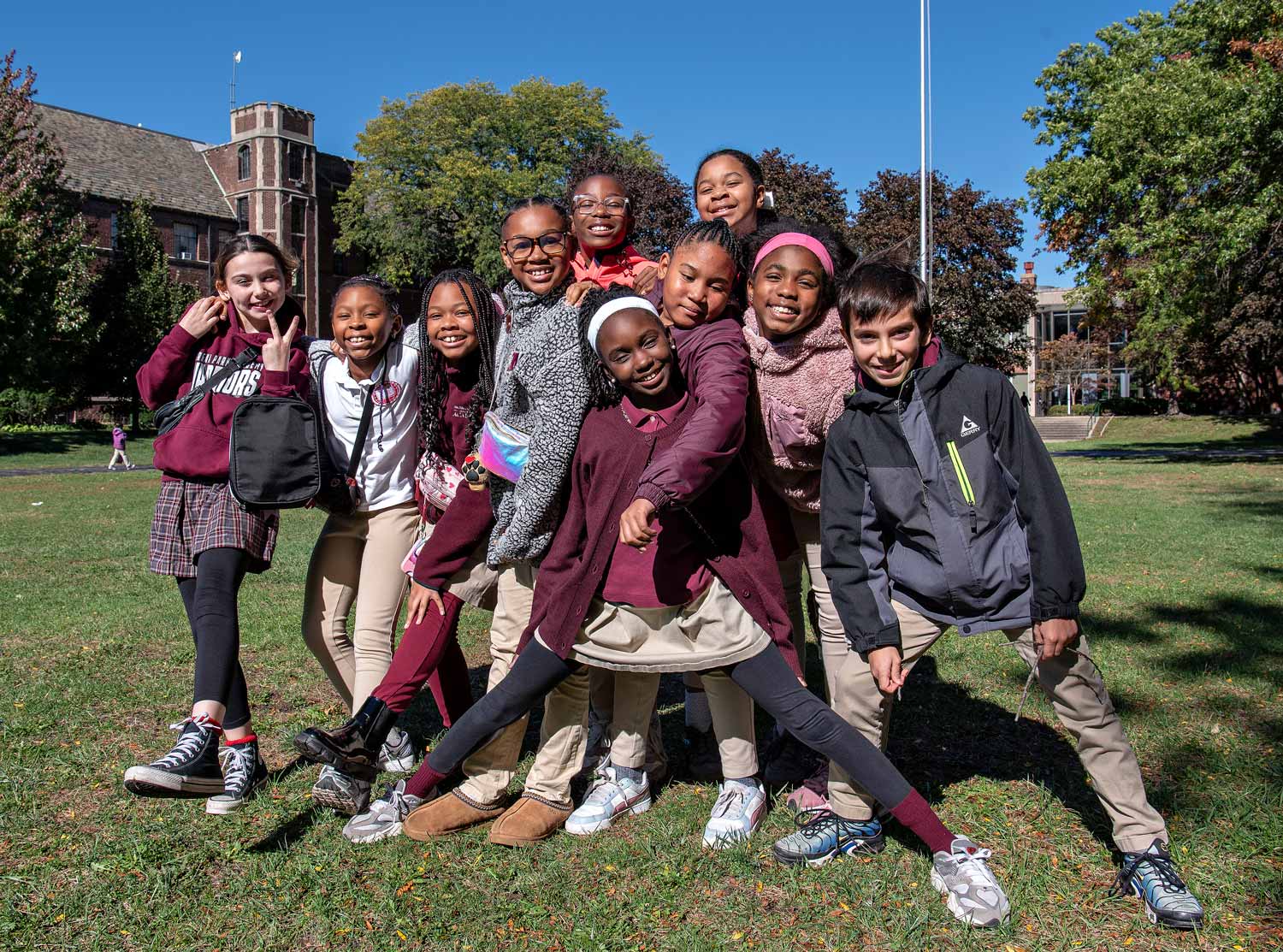
They aren’t little kids anymore, but they’re not quite high schoolers just yet. They are, as we can expect, somewhere in the middle.
Educating seventh- and eighth-grade students requires a unique approach that differs in many notable ways from students both younger and older.
The Need to Explore
Morgan Park Academy is committed to educating the whole child. Sometimes, that looks like differentiated instruction to meet the needs of all learners. That takes on added weight in seventh and eighth grade as we direct students toward the more individualized course of study they will have in Upper School, with increased opportunities to explore their interests in their extracurricular and leadership endeavors.
While our entire Middle School curriculum is accelerated, seventh- and eighth-graders may take and receive Upper School credit for more advanced courses in world languages and math.
In the arts, our seventh- and eighth-grade students, like our sixth graders, participate in a rotation of courses, allowing them to explore a range of subjects. Through this rotation, students are encouraged to sample different disciplines before selecting a path for Upper School. In their Arts classes, projects are more student-driven, helping encourage creative choice and foster independence.
The typical seventh- or eighth-grader has lots of interests that may conflict with one another and may change frequently. As a faculty, we are committed to helping them to explore and hone their interests.
We invite and encourage students to get involved in multiple activities outside the classroom, whether that’s playing on an athletic team, participating in a performing group, or pursuing other interests. With teachers committed to communicating with one another about students’ busy schedules, we work together to make it possible for students to participate in a variety of experiences, from athletics and drama productions to chess club, music performances, and volunteer opportunities. We want students to take advantage of the many opportunities available to them while also learning to balance their commitments and responsibilities.
Social Life
I often tell Middle School students that I do not — nor would I ever — require them to be friends with everyone. We do, however, require that students interact with civility and mutual respect. Social times such as lunch and recess are crucial for students to be with friends and peers and navigate personal relationships.
Major hormonal and developmental changes at this age also impact the social life of older Middle School students. Suddenly, these teenagers start acting like, well, typical teenagers.
Before our students begin to explore dating relationships or potentially risky behaviors, we want to help them learn to make informed choices. Our advisory and assembly program covers such diverse topics as healthy relationships, personal hygiene, safe internet communication, and the importance of sleep.
Leadership and Advocacy
Preparing these students for high school, college, and beyond, we stress the values of leadership, responsibility, and doing the right thing.
Our older Middle School students are seen as leaders by their younger classmates. Often, they lead in very visible and tangible ways: on the athletic field, on stage, as Junior House leaders, as section leaders in our performing groups, or in their academic achievements. Students in the seventh and eighth grades who qualify academically may apply for the National Junior Honor Society, and are asked to provide evidence of their leadership, character, and commitment to service.
We also want MPA students to embrace the idea of leading by example, and regularly engage our students in conversations about advocating for others. This happens in the classroom, in advisory group meetings, and in group endeavors; recently, for example, some recent social media challenges sparked some engaging discussions about what it means to do the right thing and the danger of keeping silent about injustices.
In addition to standing up for others, seventh- and eighth-grade students learn to advocate for themselves, instead of relying on their parents. Our teachers help to foster this, contacting students directly with academic concerns and with service opportunities, either in person, by email, or via myMPA.
The ability to seek help or guidance from a teacher is a valuable life skill, and one that we want our students to develop long before they reach Upper School or college. A recent Morgan Park Academy graduate stopped to visit while on break from college. When I asked how it was going, she responded, “Are you kidding me? Working with professors is so easy. I’ve been asking teachers for help since I was in seventh grade.” Her response made me smile, but it also reminded me how important these seemingly small lessons are. Our students are learning to take initiative, communicate with adults, ask questions, and take responsibility for their own learning. Those skills will serve them well long after they leave Middle School.
I am proud to be part of a school where our teachers understand 13- and 14-year-olds — their need to try new things, their sometimes complicated social ecosystems, their desire for independence, and their need for adults who are willing to listen, guide, and occasionally redirect them.
Certainly, the Middle School years can be bumpy at times. Friendships change, interests shift, emotions run high, and students don’t always make the choices we hope they will. That’s part of growing up. Our job is not to eliminate every bump in the road, but to help students navigate those moments, learn from their experiences, and build the confidence to handle the next challenge.
At MPA, we have the privilege of walking alongside students during this important stage. We give them room to explore, opportunities to lead, and the support they need when things don’t go quite as planned. Most importantly, we want them to know that they are seen, that they belong, and that there are adults here who care about them and are invested in their success.
By the time our students move on to Upper School, they may not have everything figured out (and that’s okay!). But we hope they leave us a little more confident, a little more independent, and ready to take on what’s next.
By Heather Kurut
Mrs. Kurut is our principal for grades 3-8.