

Lower School Curriculum (2-5)
Overview
Following the Academy’s philosophy of teaching the whole child, the program strives for a balance among intellectual, social-emotional, creative, and physical activities. The academic program focuses on five major disciplines: Language Arts, Mathematics, Science, Social Studies, and World Languages. This core coursework is supplemented throughout the grades by experiences in Fine and Performing Arts, Physical Education, Technology, and Character Education.
Developing reading and language arts skills is a major focus of the Lower School. An eclectic approach combines children’s literature with exercises from anthology books. Emphasis is placed on strengthening phonics and other word attack strategies, comprehension skills, and vocabulary building. All other aspects of language arts – grammar, spelling, punctuation, capitalization, etc. – are incorporated into the program through writing, which is an integral part of the language arts program. During the elementary years, students continue to build upon this foundation through novels and anthology books. Reading instruction includes both whole and small group lessons, as well as cooperative group activities. The emphasis on writing continues in these grades, and growth is evident in portfolios and journal writing.
The Everyday Mathematics program begins in kindergarten and continues throughout second grade. The spiraling curriculum helps children master basic numerical processes and understand key mathematical concepts. In the third through fifth grades, students are transitioned from this constructionist mathematical program to a more traditional one, forming a bridge to Middle School. In fourth grade, flexible grouping is introduced for math. A pretest determines groupings, and teachers cluster students based on current skill and concept understanding for a particular topic. Student abilities are grouped and regrouped for each unit. Differentiation via flexible grouping propels all children academically and supports our whole child philosophy.
In science, students develop an understanding and working use of the scientific method as they practice questioning, predicting, observing, experimenting, collecting data, and drawing conclusions. Activities and experiments encourage students to develop scientific inquiry skills as they deal with various topics within the physical, chemical, and biological sciences.
In the lower school grades, the social studies curriculum is designed to help children organize and develop appropriate perceptions of themselves and the world around them. Class discussions, role-playing, and materials from various programs are used to strengthen self-concepts and decision-making skills. In the intermediate grades, students learn of factors that have shaped their world, develop research skills, learn how to read and create maps, and begin to develop the skills necessary for critical analysis necessary for their fifth grade course in World Geography. Students frequently work in cooperative groups, give oral presentations, enact historically significant events, and use the computer in research and presentations to enhance their studies. Each year, students look forward to Global Week, during which an in-depth study of a target country and service-learning replace the regular curriculum.
Fifth graders participate in an inquiry-based research project called the Cornerstone Project. Students self-select a topic they are keenly interested in to complete an intensive, fully integrated study. Examples of some possible topics from which a child may choose an inquiry question are a new skill they would like to learn, an invention, a person they would like to know more about, a scientific wondering, a particular historical event, or a curriculum topic from a previous grade that the student may want to explore in depth. The project is created at school, and each child presents their project to their peers and invited guests.
Character education encompasses following the MPA way of “Be Kind and Do Your Best.” Doing your best covers goal setting, celebrating individuality, being proactive, and practicing mindfulness. The topic of kindness includes encouraging students to walk in someone else’s shoes, being open to diversity, and tapping into another person’s feelings through empathy. The Responsive Classroom program provides daily practice and modeling of building a community where everyone is a valued, contributing member.
Character education in early elementary (K-3) involves helping students identify their complex emotions while giving them skills to control them. Classes learn about personal space, how to read body language, polite listening skills, knowing when to self-regulate, and understanding when to reach out to a teacher when they have maxed out their personal resources.
Through the Technology/STEAM curriculum, Grades 2-3 students will participate in various STEAM projects using the materials in Makerspace. They will demonstrate proficiency in using computers and applications, an understanding of the concepts underlying hardware, software and connectivity, and the responsible use of technology, and an understanding of ethics and safety issues in using electronic media at home, in school, and in society. Additionally, they will use technology for research, critical thinking, decision-making, communication and collaboration, creativity, and innovation. Through a cross-curricular platform of educational software and devices, students will critically engage in public discussion on CS-related topics; develop as learners, users, and creators of CS knowledge and artifacts; better understand the role of computing in the world around them learn, perform, and express themselves in other subjects and interests.
In addition to the concepts taught in 2nd-3rd grades, students in grades 4-5 will focus on Design Engineering Projects, primarily in the Makerspace.
2nd Grade Curriculum
READING AND LANGUAGE ARTS
Students in second grade are provided with an integrated literature-based language arts program composed of various experiences in listening, speaking, reading, and writing. They are given multiple opportunities to interact with print, choose materials to read, collaborate, and communicate with each other using literature as a foundation. This takes place during guided reading blocks.
The foundation of the second grade Language Arts program is the Superkids Reading Program, building upon kindergarten and first grade skills. Instruction each day has three parts: Word Work, Reading, and Writing. Word Work and Writing are taught to the whole group, with differentiated instruction to support children as needed. Reading instruction is taught to children in small, ability-level groups. Readers include decodable fiction stories about the Superkids. The readers are used for reinforcing decoding skills and building fluency. SUPER Magazine is an engaging science and social studies magazine written especially for second graders. The magazines are used for small-group reading instruction with informational text. Book Club books provide authentic literature in a variety of fiction genres. The books are used for small-group reading instruction with literary texts. Each group typically reads eight books chosen to match children’s reading abilities. Each Book Club title has a journal containing questions to help children connect with the text and build on higher-level thinking skills such as inference and summarizing.
Reading strategies for monitoring comprehension, accuracy, fluency, and expanding vocabulary are the cornerstones of our reading program. Students practice summarizing, comparing and contrasting, predicting, and asking questions. Contextual strategies for developing word meaning are modeled. Word attack skills are consolidated and extended., while sight vocabulary is increased. Students monitor comprehension for unknown vocabulary. Students work as a whole class, in small discussion groups, and as individuals to strengthen and extend comprehension skills and develop reading strategies. A goal for students is to link concepts from the text to their daily lives. Progress is measured through discussion, daily written work, self-reflection, portfolios, and teacher-made assessments.
In addition to Superkids writing activities, students are given many opportunities to write about topics and issues of their choosing through Writers’ Workshop. Journal writing and other projects prompted by seasons, holidays, or picture books are also included. Students use graphic organizers to expand their writing to a cohesive five-sentence paragraph and then to multi-paragraph essays. The writing process is emphasized through planning, setting writing goals, self-selection of topics, drafting, revising, conferencing, editing, publishing, and sharing. Sentence structure, language skills, and mechanics are emphasized during all language arts blocks and as students write across the curriculum.
MATHEMATICS
Using the Everyday Mathematics program, students progress in understanding numbers and counting up to five digits, positive and negative numbers, and the breakdown of a whole into its parts. Topics include strategies for addition, subtraction, multiplication, division, comparisons, mathematics vocabulary work, exploring and presenting data, geometry, and further study of measuring, estimating, money, and patterns. Procedures and application are equally emphasized. By solving real-life problems, students build their confidence and understand the relevance of mathematics. Students share strategies and verbalize their thought processes orally and in their written work. The content is differentiated via class materials and online programs.
SCIENCE
Developing scientific thinking in students is an important part of the second grade science program. Students are given frequent opportunities to develop science processes, critical thinking, and reasoning skills that support scientific inquiry using the Scientific Method. Students delve further into the life sciences by investigating SUPER Magazine and monthly articles from Science Spin Magazines.
SOCIAL STUDIES
The second grade social studies curriculum focuses on relationships, similarities and differences in neighborhoods, large and small. The year begins with discussion and role-playing of the characteristics of a good citizen. Understanding how people must work together is a large part of our Responsive Classroom efforts to create a caring community. We want to strengthen the mutual respect among and between all constituents or members of our MPA family. SUPER Magazine and weekly Scholastic News Magazine articles feature several non-fiction articles about various social studies topics.
We also feature monthly heritage and thematic studies, such as Hispanic Heritage, Black History, Women’s History, Asian American Pacific Islanders’ History, and Holidays Around the World.
During Global Week, the daily curriculum is replaced by a study of a specific country. Cultural and geographic aspects of the country form the basis of the week’s curriculum as students experience the song, dance, literature, poetry, arts, crafts, games, and food from that target country.
WORLD LANGUAGES
The curriculum for World Languages exposes children to the study of Spanish and Mandarin. Our program allows children to explore basic vocabulary words and simple conversations. This exposure aims to inspire a lifelong interest in language learning, facilitate the beginnings of global thinking, and integrate essential 21st-century skills in the elementary program.
Students receive five weekly classroom lessons. Lessons focus on communicative, kinesthetic, and musical activities such as skits, dance, movement, songs, and rhymes. Many hands-on materials, visuals, and technology engage the students. Some written work takes place in class to facilitate the sound/spelling/character connections, but minimal homework is intended in this program at this level; instead, the children are encouraged to learn experientially. Core topics covered include reviewing and expanding previous core topics as well as domestic, farm and zoo animals, calendar and seasons, weather, fruits and vegetables, and cultural traditions, celebrations, and customs. Time permitting, the curriculum may expand to include topics chosen by the instructor.
PHYSICAL EDUCATION
Movement exploration still plays a huge role at this level, but now moves on to improving and mastering basic skills involving movement and manipulation. At this level, we see students moving from learning the basic skills to implementing them. Some of this encourages participation as a group or team, and simple competitive challenges are now being introduced. We also spend time on balance, strength, and coordination to complete the whole child’s physical education. Many students realize what they enjoy most during this age phase and what they seem to do best.
ART
Projects for the younger grades stimulate imaginative potential and develop visual awareness. Materials such as paper, crayons, chalk, oil pastels, watercolor, tempera, cloth, yarn, and two-dimensional projects are used. Basic art elements include color, form, line, shape, space, texture, and value. The originality of thought is stressed, and children are aided individually.
MUSIC
Second grade students will begin to engage the singing voice easily while singing with proper breath support and posture. They will accurately echo rhythmic patterns of longer duration on non-pitched and body instruments. Second grade will maintain and internalize a steady beat on instruments or body percussion while singing or chanting rhythms. They will distinguish simple melodic lines and recreate them on Orff instruments. Their listening skills will be enhanced by recognizing rhythmic patterns, distinguishing musical patterns, both melodically and rhythmically, and the organization within a given piece of music. Musical terminology will be introduced. The children will develop an awareness of rehearsal techniques in an ensemble setting. Mallet percussion skills will also be developed, and musical learnings in the concept area of beat, rhythm, melody, harmony, and form will occur. Songs, poems, and children’s literature will be incorporated into these lessons.
3rd Grade Curriculum
READING AND LANGUAGE ARTS
Reading strategies are practiced through reading and analyzing selections from McGraw-Hill Open Court Reading, two novels, current Scholastic magazines, and a skills practice workbook. The reading program incorporates an online ebook for students along with online assessments and activities in foundational skills, reading and responding, and language arts. Numerous additional books are made available in the classroom and library. Students read these for book reports, research projects, and recreation. Understanding vocabulary is stressed in all reading selections.
Oral communication and listening skills are practiced in class discussions, cooperative group work, oral reading, reading or reciting poetry, and oral presentations of reports or projects.
Grammar and writing skills are taught with proofreading exercises, skill practice, writing conferences, and group lessons on skills and concepts needing emphasis. Writing skills are practiced in journal entries, literature responses, paragraphs on assigned topics, and longer writing assignments in which students are carried through the writing process. Cursive writing is introduced and practiced weekly.
MATHEMATICS
In the third grade, students use the McGraw-Hill My Math series. Problem-solving skills are developed through each unit, including place value and money, addition and subtraction, data and probability, multiplication and division basics, time and measurement, geometry, and fractions and decimals. In each unit, students review the essentials from the previous year to build on their prior knowledge.
SCIENCE
Third grade students begin the year with a study on recycling and composting. They learn how recycling helps the environment. Students continue exploring the scientific method to become more familiar with scientists’ processes, such as observing, classifying, communicating, hypothesizing, experimenting, recording data, and drawing conclusions. Students use the Discovery Education tech book to learn about units ranging from Forces and Motion, Electricity and Magnetism, Life Cycles of Plant and Animal Organisms, Traits and Inheritance of Children and Offspring, Survival and Extinction of Organisms and Habitats, Interactions and Population Changes in Ecosystems, and Weather and Climate. Current science topics are covered through the Scholastic Super Science Magazine. They are encouraged, but not required, to participate by doing a science fair project.
SOCIAL STUDIES
Students in third grade use library books, magazines, videos, websites, state tourist information, photos, souvenirs, and maps to explore social studies. Students learn about our flag, an introduction to our government, and map skills. Other themes and units include national parks, the fifty states, inventions, and pioneer life. Students read about current topics in the weekly Scholastic News Magazine. In an international unit leading up to the Global Week, students learn facts about the country each class has chosen and gain empathy for and understanding of the history, culture, and life experiences of people who live in those countries.
WORLD LANGUAGES
The curriculum for World Languages exposes children to the study of Spanish and Mandarin. Our program allows children to expand communication skills by building on the students’ foundation of vocabulary and beginning grammar. Our program seeks to inspire a lifelong interest in language learning and global thinking and integrate essential 21st-century skills into the elementary program.
PHYSICAL EDUCATION
Movement exploration still plays a huge role at this level, but now moves on to improving and mastering basic skills involving movement and manipulation. At this level, we see students moving from learning the basic skills to implementing them. Some of this encourages participation as a group or team, and simple competitive challenges are now being introduced. We also spend time on balance, strength, and coordination to complete the whole child’s physical education. Many students realize what they enjoy most during this phase and what they do best.
ART
Third graders are anxious to relate their art projects to imaginative and realistic interpretations. The basic elements of composition are introduced to arrange or organize the art piece in a way that is pleasing to the artist and the viewer. It helps give structure to the subject. Projects such as printing, drawing, paper mache, sewing, depth perception, optical illusions, murals, weaving, and pen and ink drawings are used. Mixed media projects are popular in these grades. Formal art elements and vocabulary are introduced. Success and progress in the children’s work are measured in terms of composition, handling of media, involvement, and attitude. Artwork is continually displayed in the art room and hallways.
MUSIC
In third grade, students will focus on more complex rhythms and engage their singing voices more easily. They will sing familiar folk, ethnic, holiday, and patriotic songs in English and other languages. Third grade will internalize pitch before singing aloud while singing with more complex rhythmic patterns being played on pitched and non-pitched percussion instruments. Students will perform accurate rhythms and melodic patterns while maintaining a steady beat. They will begin to apply body percussion and rhythmic patterns to classroom instruments, adding melodic elements where appropriate. Performing multiple independent rhythms in an ensemble setting is essential to growing as a young music student. The children will utilize proper musical terminology as it applies to compositions studied in class. Finally, students will be introduced to the recorder, including learning notes, proper fingering, and playing songs.
4th Grade Curriculum
READING AND LANGUAGE ARTS
Reading strategies are practiced through reading and analyzing selections from McGraw-Hill Open Court Reading, novels, current Scholastic magazines, and a skills practice workbook. The reading program incorporates an online ebook for students along with online assessments and activities in foundational skills, reading and responding, and language arts. Numerous additional books are made available in the classroom and library. Independent reading is encouraged through SSR (Sustained Silent Reading). Reading instruction is done in various forms, including whole class, cooperative small groups, shared inquiry, and student-led literature circles. Reading often integrates with other subject areas and inspires writing and character education. Students read novels, write creatively, and create projects that reinforce understanding. Students read these for book reports, research projects, and recreation. Understanding vocabulary is stressed in all reading selections.
Many written and oral opportunities are given to further develop writing and language skills. Students write in journals regularly and write several compositions, stories, and poems. Students further develop language and grammar skills, emphasizing complete sentences and paragraphs and capitalization, punctuation, and parts of speech. Editing techniques are highlighted and practiced daily. Larger writing projects, including compositions and creative writing, give students practice utilizing the writing process components. Though organization and grammatical skills are stressed, equal importance is placed on creative thought, style, and critical thinking. Students frequently share their writing informally with the class and make formal presentations of reports, projects, and books they produce. This practice gives students numerous occasions to celebrate their work and that of their classmates.
MATHEMATICS
In fourth grade, students are taught using flex groups and the McGraw-Hill My Math series. Though both groups cover all the major concepts of fourth grade math, one group moves faster, includes much enrichment, and moves into the fifth grade math concepts. Addition, subtraction, multiplication, and division are reviewed and expanded. Concepts include place value, multi-digit multiplication and division, geometric construction and concepts, word problems, addition, subtraction, equivalency of fractions, working with mixed numbers, decimals and percents, algebra, and estimation. Problem-solving strategies are reinforced and expanded through word problems, math stories, hands-on activities, games, and an enriched curriculum.
SCIENCE
In fourth grade, students will use the resources of the MPA garden to practice observation skills and do activities related to the plant and animal communities there. Throughout the year, they will learn to think like scientists as they conduct investigations, perform experiments, and expand their knowledge through research. Topics of current interest will be covered with Super Science magazines and the Mystery Science online activities. The Discovery Education science program will include physics units studying energy, motion, electricity, sound, light, and heat. In life sciences, students will learn how living things grow and develop, how they receive and use information, and how they adapt for shelter and defense. The earth and space sciences component challenges students to investigate landforms and how they are transformed by forces and events such as erosion, deposition, volcanoes, and earthquakes. Awareness of how humans affect their environment is promoted throughout the year, focusing on water resources and fossil fuels compared with renewable energy sources.
SOCIAL STUDIES
Regions of the United States are the focus of fourth grade social studies using the My World interactive program. The environment of each region will be explored, including its natural resources, economy, and history. Cultures and customs of the United States will be studied, as well as government and citizenship. There will also be a unit on the history of Chicago where students will learn more about our great city. Geography skills will be developed through interpreting, organizing, and identifying various types of maps. Research techniques augment a multimedia approach, note-taking, report writing, and project-making. During Global Week, students will gain an understanding and appreciation for their chosen country by exploring culture and heritage.
WORLD LANGUAGES
The curriculum for World Languages exposes children to Spanish and Mandarin. Our program allows children to expand communication skills by building on the students’ foundation of vocabulary and beginning grammar. Our program seeks to inspire a lifelong interest in language learning and global thinking and integrate essential 21st-century skills into the elementary program.
PHYSICAL EDUCATION
As students progress through their Lower School years, many focus on skills that will be used later in team sports. Sports and games teach social interaction, sportsmanship, and positive peer competition. More emphasis is now placed on game rules, and the students learn to be honest and perform with integrity (doing the right thing even when no one is looking). Physical fitness now comes more into play, as well as the care of the body, and health and wellness are incorporated into daily lessons. Student progress is assessed through participation, positive attitudes, cooperation with peers and teammates, and following the rules of competition.
ART
Fourth graders are anxious to relate their art projects to imaginative and realistic interpretations. The basic elements of composition are introduced to arrange or organize the art piece in a way that is pleasing to the artist and the viewer. It helps give structure to the subject. Projects such as printing, drawing, paper mache, sewing, depth perception, optical illusions, murals, weaving, and pen and ink drawings are used. Mixed media projects are popular in these grades. Formal art elements and vocabulary are introduced. Success and progress in the children’s work are measured in terms of composition, handling of media, involvement, and attitude. Artwork is continually displayed in the art room and hallways.
MUSIC
In fourth grade, students continue to use mallets, and these are used as one of their main instruments. The students will echo and perform short rhythmic and melodic patterns. While using that as a platform, they will accurately perform simple rhythmic and melodic instrumental pieces, demonstrating the internalization of the underlying pulse. Students will perform small group instrumental parts while others sing or play contrasting parts. They will then start to apply their musical knowledge and skills to the soprano recorder, incorporating expanded musical vocabulary with recognizing and demonstrating knowledge of basic musical forms and structure.
Their embouchure helps produce a sound on their recorder. They will learn that their fingers must cover the recorder’s holes to produce a sound. Music is composed on a staff. The staff will include line notes, space notes, measures, and bar lines. Fourth grade will learn about time signature, repeat signs, and how to follow the directions in a score.
5th Grade Curriculum
READING AND LANGUAGE ARTS
Reading strategies are practiced through reading and analyzing selections from McGraw-Hill Open Court Reading, novels, current Scholastic magazines, and a skills practice workbook. The reading program incorporates an online ebook for students along with online assessments and activities in foundational skills, reading and responding, and language arts. Additional books are available in the classroom, and independent reading is encouraged. Reading instruction is done in various forms, including whole class, cooperative small groups, shared inquiry, and student-led literature circles. Students read novels, write creatively, and create projects that reinforce understanding. Students read these for book reports, research projects, and recreation. Understanding vocabulary is stressed in all reading selections.
Many written and oral opportunities are given to further develop writing and language skills. Students further develop language and grammar skills, emphasizing complete sentences and paragraphs and capitalization, punctuation, and parts of speech. Editing techniques are highlighted and practiced daily. Larger writing projects, including compositions and creative writing, give students practice utilizing the writing process components. Though organization and grammatical skills are stressed, equal importance is placed on creative thought, style, and critical thinking. Students frequently share their writing informally with the class and make formal presentations of reports, projects, and books they produce. This practice gives students numerous occasions to celebrate their work and that of their classmates.
MATHEMATICS
Students in fifth-grade math explore more advanced topics in mathematics. Students master the four basic operations of addition, subtraction, multiplication, and division with two- and three-digit whole numbers, and place value and exponents are reviewed and expanded. Other topics include multi-digit multiplication, multi-digit division, properties of addition and multiplication, solving expressions using order of operations, and the operations of addition, subtraction, multiplication, and division with decimals, fractions, mixed numbers, and one-step equations. Also included are divisibility rules, greatest common factor, least common multiple, prime factorization, measurement, and geometry. Additional enrichment lessons may include connecting the unit to a project, developing a game, and multi-step problem-solving. In math, independent and group problem-solving is emphasized. Interpretation of written word problems is integral to the curriculum. Concrete understanding is built through physical manipulation, drawing, and note-taking. Throughout all the units, the teacher aims to help students develop a sense of a real-world purpose in math.
SCIENCE
Fifth grade students engage in interdisciplinary inquiry and project-based Science learning that emphasizes critical thinking and the habits of mind of scientific thinkers. Students build their knowledge of Earth, Life, and Physical Science through hands-on activities. They apply their understanding of essential questions by developing hypotheses and designing experiments to test their ideas. They also work to develop their skills as effective readers, researchers, and writers through lessons and projects. Topics of study may include Physical Science – the building blocks of matter, combining matter, changes in matter, earth’s force; Life Science – energy for humans and other living things; Earth & Space Science – patterns in the sky, the changing earth, and protecting the planet.
SOCIAL STUDIES – WORLD GEOGRAPHY
This course begins with an overview of basic geographical terminology, skills, and map reading. Next, students study the human and physical geography of regions that correlate with the setting of our novels in language arts. Throughout these units, the focus is first on the physical geography, then its effect on each area’s history and cultural development. Students are also made aware of the present state of affairs in countries. The course’s primary goal is to study other regions of the world, focusing on the relationship between the environment and the values and lifestyles of the people living in each region. Oral and written reports, both individual and group, form an integral part of the course. These projects allow students to develop research and critical-thinking abilities. Tests and quizzes are also given as a means of evaluating student progress.
During Global Week, fifth grade students participate in various activities that promote global awareness. Local day trips will be taken during this week and may include Chinatown, Bronzeville, the Global Kitchen, and Hindu temples. Students give back to the community by completing service projects.
WORLD LANGUAGES
In fifth grade, the curriculum for World Languages changes to allow children to expand their interest and knowledge of one language. Our program will enable children to develop communication skills, building on the students’ foundation of vocabulary and grammar in their chosen world language. Our program seeks to inspire a lifelong interest in language learning and global thinking and integrate essential 21st-century skills into the elementary program.
Spanish
If this is the selected language, students receive five weekly classroom lessons for the school year. A textbook is introduced and incorporated into daily lessons in fifth grade Spanish. Lessons continue to include communicative, kinesthetic, and musical activities such as skits, dance, movement, songs, and rhymes, but Spanish grammar and structure are formally addressed more deliberately and structured. Hands-on materials, visuals, and technology are used to engage the students. Written work is an important part of what takes place in class. Various assessments are used throughout the year to assess each student’s progress and growth. We continue to discuss and explore the Spanish-speaking world, notable works of art, cultural traditions, celebrations, and customs this year. The Spanish curriculum expands to include adjective agreement, infinitives, and verb conjugations in the present tense.
Mandarin
If this is the selected language, students receive five weekly classroom lessons for the school year. In fifth grade, students are formally introduced to pinyin, the Chinese phonetic alphabet. Students will use pinyin to learn computer typing in Chinese, basic vocabulary, and Chinese grammatical structures. Emphasis is placed on developing oral and aural proficiency, communicative competence, and cultural appreciation. Listening comprehension exercises will challenge students to improve their aural abilities, while classroom discussion will further develop their speaking skills. By the end of the year, students will start to communicate effectively in both written and oral Chinese.
PHYSICAL EDUCATION
As students progress through their Lower School years, many focus on skills that will be used later in team sports. Sports and games teach social interaction, sportsmanship, and positive peer competition. More emphasis is now placed on game rules, and the students learn to be honest and perform with integrity (doing the right thing even when no one is looking). Physical fitness now comes more into play, as well as the care of the body, and health and wellness are incorporated into daily lessons. Student progress is assessed through participation, positive attitudes, cooperation with peers and teammates, and following the rules of competition.
ART
Fifth grade focuses on art as a language. Artists explain their world and express their beliefs through visual means. Art makes us aware of who we are as individuals and joins us with other people and cultures. Students move away from interest in art solely for personal expression toward a broader interest in art. They create work in response to different cultures and periods of art. Elements of art and an introduction to color theory will be covered. Drawing, painting, collage, and printmaking will be explored. Students are required to maintain a sketchbook. They show their work in an art exhibition.
MUSIC
In fifth-grade music, students will continue to work with the elements of music at a more complex level. Students will develop a background in music by studying the baroque, romantic, classical, and modern eras. We will listen to passages of music and composers from those specific time periods. Students will also gain musicianship that prepares them for a wide range of additional educational and vocational activities that include rhythmic, melodic, harmonic theory, music appreciation, and songwriting as a component. Building upon lessons from playing the recorder, students will be introduced to band instruments and begin focusing on band and chorus ensemble experiences. Students will work in full ensemble, sectional, and individual groups. Students will begin standard notation reading, regularly covering musical form and function. As students gain confidence and competence, musical form and function are regularly covered, further developing a musical language. Analysis of musical form is developed further. Rhythmic notation, dynamics, and intonation are addressed.

MPA Ranked Again as Southland’s Top School
Morgan Park Academy remains the top school in Chicago’s Southland area and one of the best in the state, according to an annual report from the school rankings and reviews website Niche.com. MPA was among 2.5% of schools nationwide to receive an overall grade of A+.

Theatre Camp Brings the Performing Arts to Life
Our Summer Performing Arts Intensive in June 2026 gave students in grades 2–8 an immersive introduction to the collaborative world of theatre, culminating in a dynamic showcase performance that highlighted four weeks of creativity, hard work, and artistic growth.

First-Graders Publish Zoo Animals Book
Lower School's hottest read is “The Secret Life of Zoo Animals,” a new hardcover book by Ms. Lopez’s first-graders.

Launching Into Growing Season with Hands-On Learning and Community Leadership
Through a vibrant partnership between faculty, students, and dedicated parent volunteer Emily Lambert, Lower School is bringing sustainability to life with hands-on garden learning experiences that connect directly to the classroom.
Global Week 2026
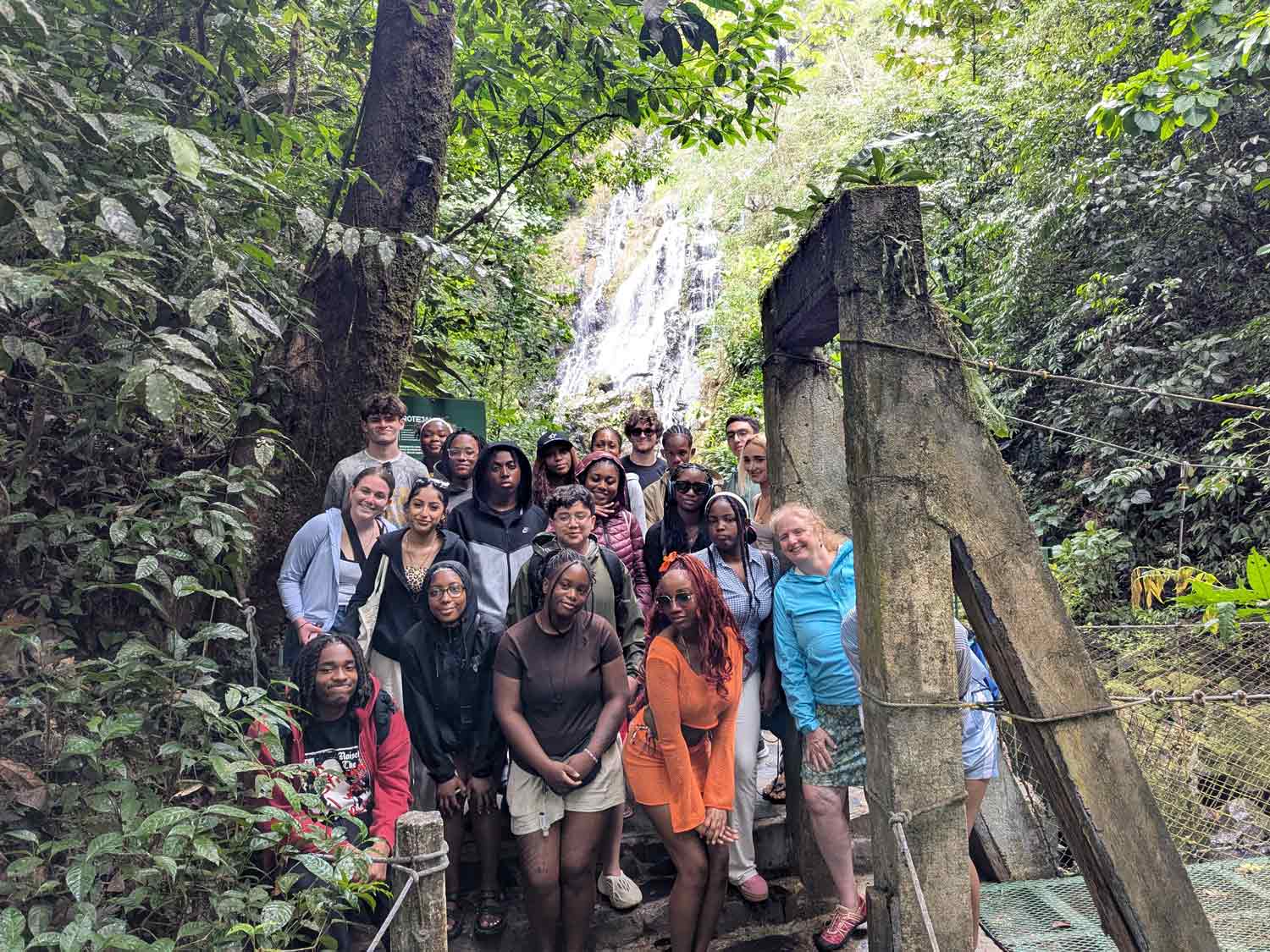
One key part of Morgan Park Academy's global curriculum is a school-wide Global Week each March. Students and teachers in grades 5-12 come together outside the classroom to share a broader range of learning experiences focused on language and culture, service, and sustainability. Lower School students explore the world's countries and cultures closer to home.

Second-Graders Showcase Empowerment Projects
Second-grade students recently created and presented Empowerment Projects designed to celebrate their unique gifts and encourage self-expression.
Celebrating Black History Month
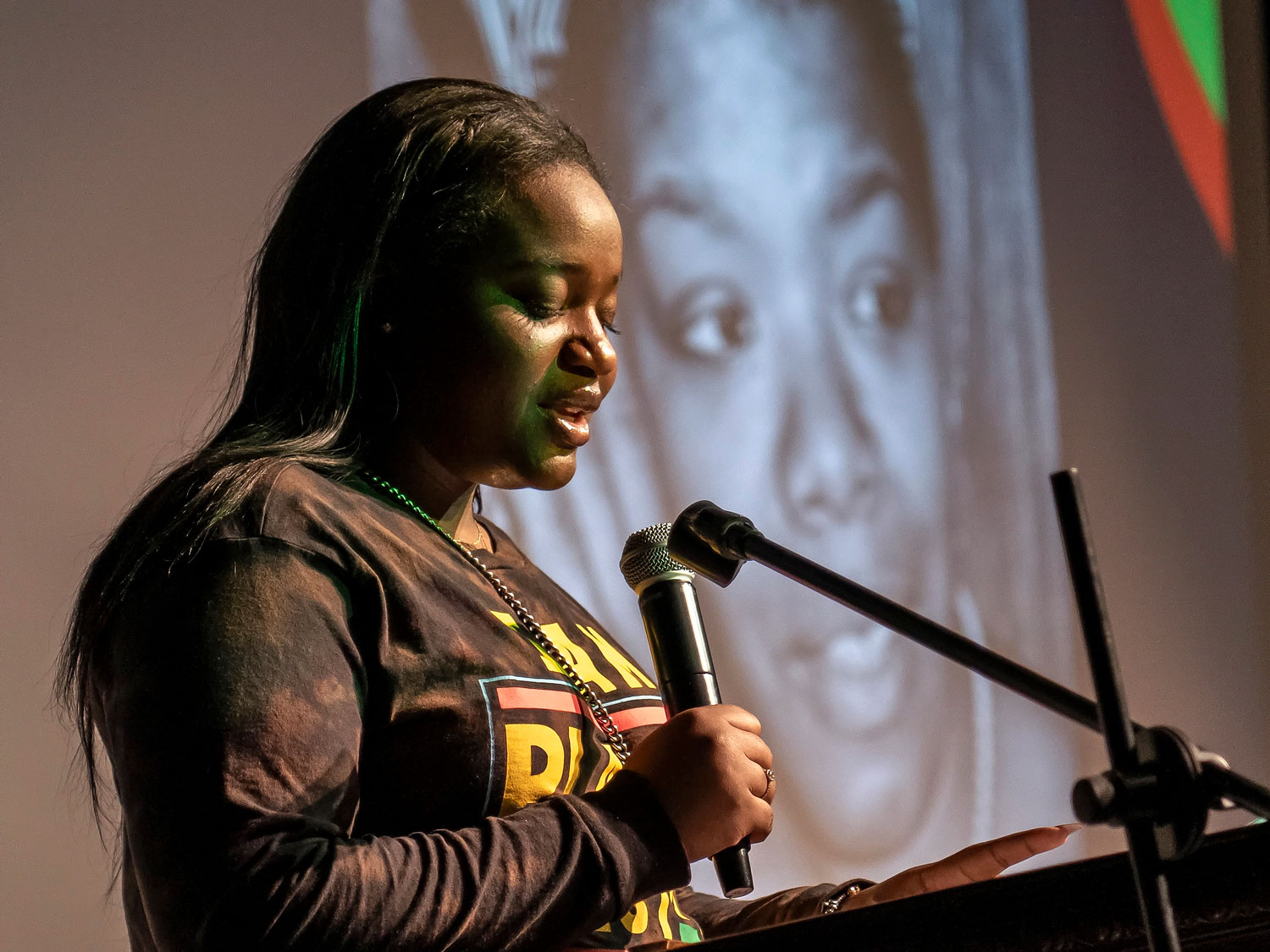
Students and teachers in grades 312 welcomed Black History Month on Friday, Jan. 30, 2026 with powerful music and thoughtful presentations, launching a month of study, reflection, and inquiry into the lives and legacies of influential Black changemakers throughout history.

K-3 Students Honor Dr. King’s Legacy
Students in grades K–3 took the stage to share heartfelt songs, thoughtful poems, and lessons learned from Dr. Martin Luther King Jr.’s message of peace, courage, community, and standing up for what’s right.
